Love this? Save it for later!
Share the inspiration with your friends
“Hey, have you ever tried making katsu bowls at home?” my coworker asked one hectic afternoon while we were swapping lunch stories. Honestly, I’d always thought this crispy Japanese dish was something you only got in restaurants—too tricky to pull off in a regular kitchen. But after that casual chat, I found myself in the kitchen late at night, armed with pork cutlets and a curiosity I couldn’t shake.
The sizzle of panko breadcrumbs frying in oil, the sweet and tangy aroma of homemade tonkatsu sauce simmering gently—it all came together in a way that surprised me. What started as a skeptical experiment turned into a comforting ritual I repeated multiple times that week (yes, I might have gone a bit overboard). The crispy texture, paired with that rich sauce and fluffy rice, felt like the perfect antidote to the usual dinner rut.
What really stuck with me was how approachable this recipe is. It’s not just about making something tasty; it’s about crafting a bowl that’s satisfying, balanced, and packed with layers of flavor that hit just right. And if you’re anything like me—juggling work, life, and the occasional “what’s for dinner?” panic—this recipe fits right in.
Now, whenever I hear that distinctive crunch or catch the scent of tonkatsu sauce, I’m reminded of that quiet night when a simple Japanese katsu bowl turned into a new favorite. It’s the kind of dish that feels like a little celebration of textures and tastes, with an honest-to-goodness yum factor that lingers. And that’s why I’m sharing it with you—because sometimes, the best recipes come from the moments you least expect.
Why You’ll Love This Recipe
Having tested and tweaked this Japanese katsu bowls recipe more times than I can count, I can say it’s genuinely one you’ll want to keep in your weekly rotation. The combination of crispy pork cutlets, fragrant rice, and a luscious homemade tonkatsu sauce just works every time. Here’s why it’s a standout:
- Quick & Easy: You can have these katsu bowls on your table in about 30 minutes—perfect when you’re short on time but craving something satisfying.
- Simple Ingredients: Nothing complicated here; most are pantry staples, and the fresh ingredients are easy to find at any grocery store.
- Perfect for Weeknight Dinners: It’s a dish that feels special without the fuss—great for impressing yourself or guests without stress.
- Crowd-Pleaser: Whether it’s kids, friends, or family, the crispy texture and rich sauce always get rave reviews.
- Unbelievably Delicious: The crispy panko crust on the pork contrasts beautifully with the velvety tonkatsu sauce—comfort food with a Japanese twist.
This isn’t just another fried pork cutlet recipe. The secret lies in the tonkatsu sauce I make from scratch, which balances sweetness, tang, and umami in a way that store-bought versions can’t match. Plus, pressing the panko breadcrumbs gently into the pork ensures that perfect crunch without overdoing it. Honestly, I’ve found that this recipe strikes the ideal balance between indulgence and simplicity, making it a go-to whenever I want something filling but not complicated.
And if you’re the kind of home cook who loves layering flavors and textures (like I do with my crispy BBQ chicken grilled cheese), this recipe will feel right at home in your kitchen.
What Ingredients You Will Need
This recipe uses simple, wholesome ingredients to deliver bold flavor and that irresistible crispy texture without any fuss. Most of these you likely already have in your kitchen or can easily grab from your local grocery store.
- Pork Cutlets: Thin boneless pork loin chops or pork tenderloin slices work best—look for cuts around 1/2 inch thick for even cooking.
- Salt and Pepper: Basic seasoning to bring out the pork’s natural flavor.
- All-Purpose Flour: For dredging the pork—a light coating helps the egg and panko stick nicely.
- Eggs: Beaten, to create that sticky layer for the breadcrumbs.
- Panko Breadcrumbs: Japanese-style breadcrumbs are key—they’re lighter and crispier than regular ones. I like using the brand “Kikkoman” for a great texture.
- Vegetable Oil: For frying. Canola or peanut oil works well due to their neutral flavor and high smoke point.
- Short Grain White Rice: Cooked and fluffy—this acts as the perfect base for the bowl.
- Green Onions and Sesame Seeds: For garnish and a fresh, nutty touch.
For the Rich Tonkatsu Sauce, you’ll need:
- Ketchup: Adds sweetness and tang.
- Worcestershire Sauce: Deep umami flavor.
- Soy Sauce: For saltiness and depth.
- Mirin or Rice Wine: Balances the sauce with a subtle sweetness (you can substitute with a teaspoon of sugar if you don’t have mirin).
- Brown Sugar: To round out the flavors.
- Garlic Powder: Just a hint for savory notes.
- Ground Ginger: Adds warmth and a little spice.
If you want to customize, you can swap pork for chicken breasts or thighs for a slightly different take. For gluten-free options, almond flour or gluten-free panko breadcrumbs work well too. Also, swapping out white rice for cauliflower rice makes a lighter bowl without sacrificing satisfaction.
Equipment Needed
- Heavy Skillet or Frying Pan: A sturdy pan (cast iron works beautifully) for frying the katsu to crispy perfection.
- Mixing Bowls: For the flour, egg wash, and breadcrumbs—three bowls make the dredging process easy and organized.
- Measuring Spoons and Cups: For precise seasoning and sauce ingredients.
- Rice Cooker or Medium Pot: For perfectly cooked short-grain rice. A rice cooker takes the guesswork out, but a pot with a tight-fitting lid works fine too.
- Tongs or Slotted Spoon: For flipping and retrieving the katsu from hot oil safely.
- Paper Towels: To drain excess oil after frying, keeping your katsu crispy and not greasy.
If you don’t have a cast iron skillet, a non-stick pan works well, though the crust may not get quite as crunchy. For rice, if you’re short on time, microwavable rice packets can be a decent shortcut.
Preparation Method
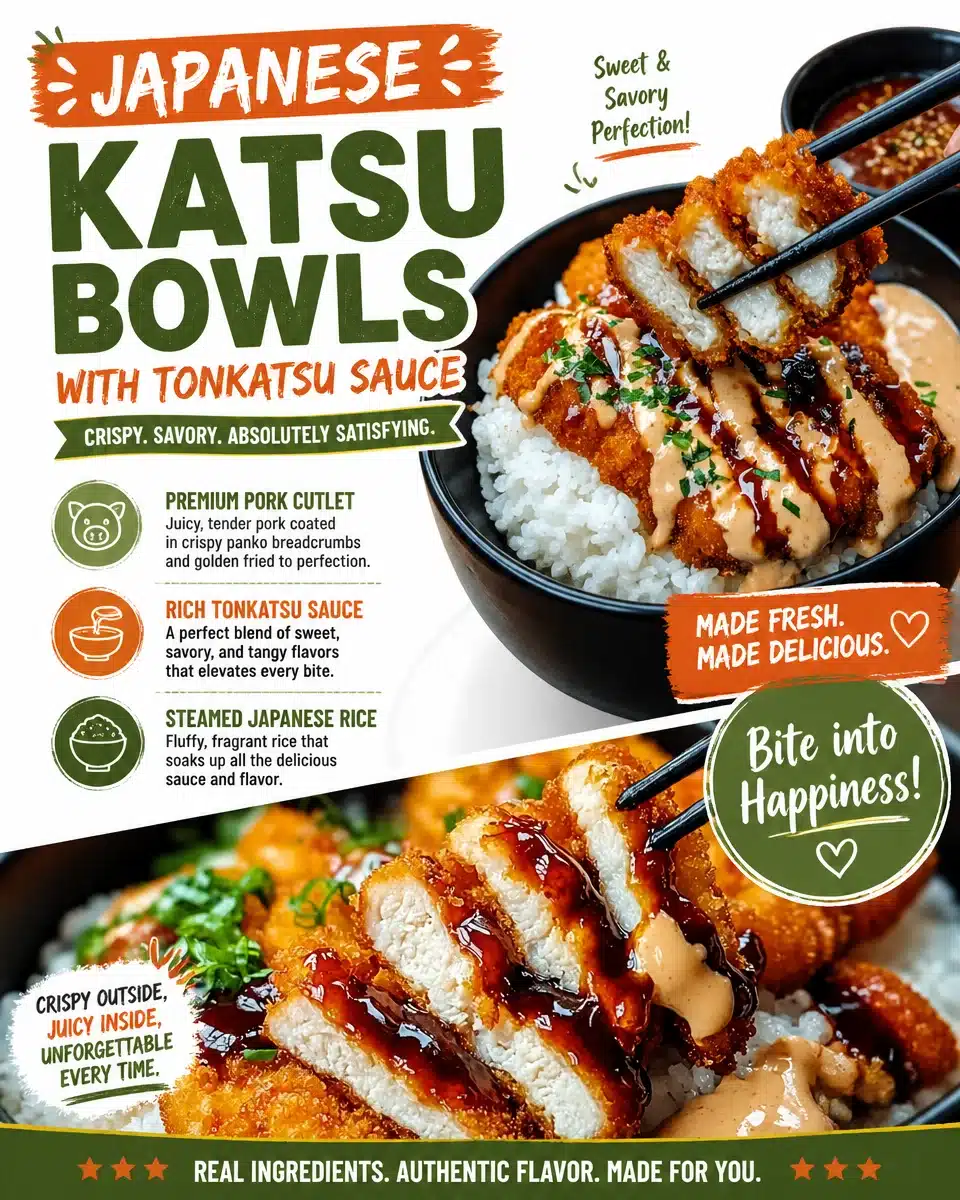
- Prepare the Rice: Rinse 1 1/2 cups (270g) short-grain white rice under cold water until the water runs clear. Cook according to your rice cooker’s instructions or simmer in a pot with 1 3/4 cups (415ml) water for about 18 minutes. Once done, let it rest covered for 10 minutes before fluffing with a fork.
- Make the Tonkatsu Sauce: In a small bowl, whisk together 1/3 cup (80ml) ketchup, 2 tablespoons (30ml) Worcestershire sauce, 1 tablespoon (15ml) soy sauce, 1 tablespoon (15ml) mirin or substitute, 1 tablespoon (12g) brown sugar, 1/4 teaspoon garlic powder, and 1/4 teaspoon ground ginger. Taste and adjust sweetness or tanginess as you like. Set aside to let the flavors meld.
- Prep the Pork: Pat 4 pork cutlets (about 4 oz/115g each) dry with paper towels. Lightly season both sides with salt and pepper.
- Dredge the Pork: Set up three shallow dishes: one with 1/2 cup (60g) all-purpose flour, one with 2 large eggs beaten, and one with 1 1/2 cups (120g) panko breadcrumbs. Coat each pork cutlet first in flour, shaking off excess, then dip into the beaten eggs, and finally press into panko breadcrumbs, coating evenly but not too thickly.
- Fry the Pork: Heat about 1/2 inch (1.25 cm) vegetable oil in your skillet over medium-high heat (about 350°F/175°C). Carefully add the cutlets, frying 3-4 minutes per side until golden brown and cooked through. Avoid crowding the pan to keep the oil temperature steady. Transfer to paper towels to drain excess oil.
- Assemble the Bowls: Scoop fluffy rice into bowls, slice the katsu cutlets into strips, and arrange atop the rice. Drizzle generously with tonkatsu sauce. Garnish with chopped green onions and a sprinkle of toasted sesame seeds for that extra pop.
If the crust feels soggy after resting, a quick 1-2 minute reheat in a hot pan revives the crunch nicely. Watch the oil temperature carefully while frying to avoid greasy or burnt cutlets—this took me a few tries to get right, but it’s worth the patience.
Cooking Tips & Techniques
Getting that perfect crispy coating without overcooking the pork is an art. Here are some tips I’ve picked up:
- Pat the pork dry: Moisture is the enemy of crispiness. Drying the cutlets well before dredging is a must.
- Press breadcrumbs gently: Don’t pack them on too hard; a lighter coating fries up crispier and more delicate.
- Maintain oil temperature: Use a thermometer if you can. If the oil gets too hot, the crust burns before the pork cooks. Too cool, and the crust absorbs oil and becomes greasy.
- Don’t overcrowd the pan: Fry in batches if necessary to keep the oil temperature steady and crispiness intact.
- Rest before slicing: Let the pork rest a couple of minutes after frying to keep juices in and prevent the crust from falling apart.
One time, I rushed and sliced the cutlets straight from the pan—big mistake. The crispy crust fell apart, and the pork lost its juiciness. Lesson learned! Now, I always let it rest and slice carefully. Also, homemade tonkatsu sauce, though simple, is a game-changer. Store-bought versions can be too sweet or artificial-tasting, but this homemade one brings balanced flavor that ties the whole bowl together.
Variations & Adaptations
This katsu bowl recipe is quite versatile and easy to tweak to suit different tastes or dietary needs.
- Protein Swaps: Use chicken breasts or thighs instead of pork for chicken katsu bowls. It fries up just as crispy and delicious.
- Vegetarian Version: Try firm tofu, pressed and breaded the same way. Double-fry for extra crunch, and you’ve got a tasty meat-free option.
- Spicy Twist: Add a teaspoon of chili powder or cayenne to the panko breadcrumbs, or drizzle sriracha over the finished bowl for heat.
- Rice Alternatives: Serve over brown rice, quinoa, or even cauliflower rice for a lower-carb bowl.
- Seasonal Veggies: Add steamed broccoli, pickled radish, or shredded cabbage to balance the richness with fresh crunch.
Personally, I love swapping in chicken thighs because they stay juicy, especially when I’m craving something a bit heartier. And for a lighter touch, serving these katsu bowls alongside a crisp cucumber salad (something like the fresh avocado caprese salad I made recently) adds a nice contrast.
Serving & Storage Suggestions
Serve your crispy Japanese katsu bowls hot, right after assembling, to enjoy the contrast between crunchy pork and soft rice. A drizzle of extra tonkatsu sauce on top just before serving amps up the flavor.
Pair this dish with a light cucumber salad or a simple miso soup to round out the meal. For a drink, something crisp like iced green tea balances the richness nicely. If you want a comforting finish, try a slice of creamy Neapolitan cake as a sweet contrast.
Leftovers keep well in an airtight container in the fridge for up to 2 days. When reheating, avoid the microwave if you want to keep the crust crispy—pop the cutlets in a hot skillet for a minute or two on each side to restore crunch. Rice reheats fine in the microwave with a sprinkle of water to keep it moist.
Keep the tonkatsu sauce separate when storing, as it can make the crust soggy over time. Flavors actually deepen a bit if you let the sauce sit overnight, so this recipe works well for meal prep or next-day lunches.
Nutritional Information & Benefits
This recipe offers a satisfying balance of protein, carbs, and fats. A typical serving provides approximately 550-600 calories, with around 35g protein, 50g carbs, and 20g fats depending on portion sizes.
Pork cutlets are a great source of high-quality protein and B vitamins, supporting muscle health and energy. The homemade tonkatsu sauce contains no artificial additives or preservatives, unlike many store-bought versions.
Using short-grain rice provides good energy release, and adding fresh garnishes like green onions and sesame seeds adds fiber and antioxidants. For gluten-free eaters, swapping panko for gluten-free breadcrumbs keeps this dish accessible without sacrificing flavor.
From a wellness perspective, this recipe hits that satisfying comfort-food note while still feeling clean and fresh—no heavy batters or deep-frying in excessive oil. It’s a balanced treat that doesn’t feel like a cheat meal.
Conclusion
These crispy Japanese katsu bowls with rich tonkatsu sauce quickly earned a spot as one of my favorite weeknight meals. The crunchy pork paired with that tangy, slightly sweet sauce turns simple ingredients into something truly memorable. Plus, it’s approachable enough for cooks of all levels and flexible enough to suit different tastes and dietary needs.
Whether you stick to pork or try chicken, tofu, or a spicy version, this recipe encourages you to make it your own. I love how it brings together texture, flavor, and warmth in a bowl that feels both indulgent and wholesome.
If you give it a try, I’d love to hear how you customize your katsu bowls or what side dishes you pair with them. Sharing your versions makes this food story even better—so don’t hesitate to drop a comment or share your tips.
Here’s to crispy bites, rich sauce, and many cozy meals ahead!
Frequently Asked Questions
What cut of pork is best for Japanese katsu bowls?
Thin boneless pork loin chops or pork tenderloin slices about 1/2 inch thick work best. They cook quickly and stay tender inside while getting crispy outside.
Can I bake the katsu instead of frying?
Yes, you can bake the breaded pork at 425°F (220°C) for about 20 minutes, flipping halfway through. It’s a lighter option but won’t be quite as crispy as frying.
How do I make tonkatsu sauce from scratch?
Mix ketchup, Worcestershire sauce, soy sauce, mirin or rice wine, brown sugar, garlic powder, and ground ginger. Adjust to taste for a balanced sweet, tangy, and umami-rich sauce.
Can I use chicken instead of pork?
Absolutely! Chicken breasts or thighs work great for katsu bowls. Adjust cooking time to ensure chicken is cooked through but still juicy.
How do I keep the panko crust crispy after frying?
Drain fried cutlets on paper towels and serve immediately. If storing, keep sauce separate and reheat cutlets briefly in a hot pan rather than the microwave to restore crispiness.
Pin This Recipe!
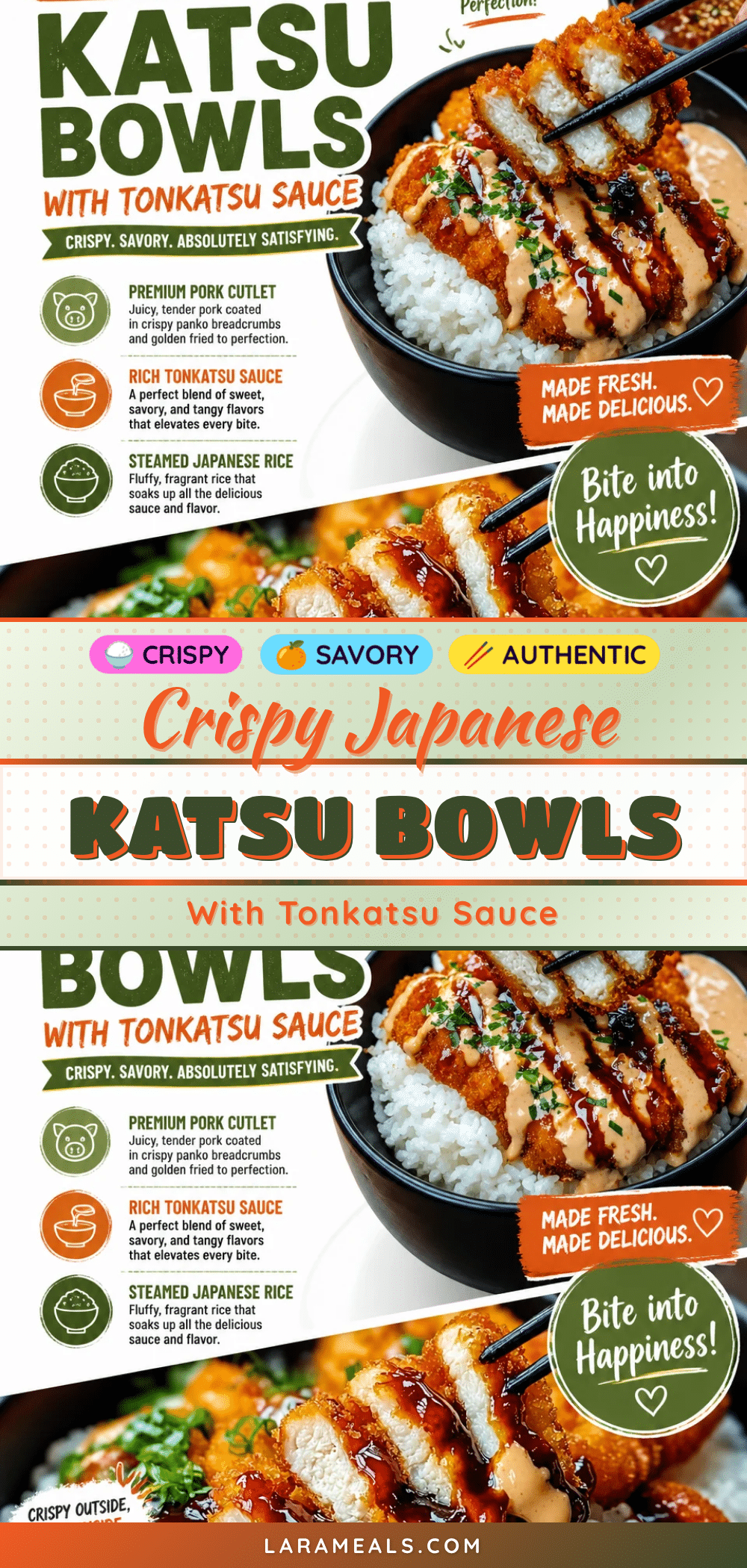
Crispy Japanese Katsu Bowls Recipe with Easy Rich Tonkatsu Sauce

A quick and easy recipe for crispy pork cutlets served over fluffy rice with a homemade rich tonkatsu sauce, perfect for weeknight dinners and crowd-pleasing meals.
- Prep Time: 15 minutes
- Cook Time: 18 minutes
- Total Time: 33 minutes
- Yield: 4 servings 1x
- Category: Main Course
- Cuisine: Japanese
Ingredients
- 4 pork cutlets (about 4 oz/115g each), thin boneless pork loin chops or pork tenderloin slices about 1/2 inch thick
- Salt and pepper, to taste
- 1/2 cup (60g) all-purpose flour
- 2 large eggs, beaten
- 1 1/2 cups (120g) panko breadcrumbs (Japanese-style)
- Vegetable oil (canola or peanut oil), about 1/2 inch for frying
- 1 1/2 cups (270g) short-grain white rice, cooked
- Green onions, chopped, for garnish
- Toasted sesame seeds, for garnish
- For the Tonkatsu Sauce:
- 1/3 cup (80ml) ketchup
- 2 tablespoons (30ml) Worcestershire sauce
- 1 tablespoon (15ml) soy sauce
- 1 tablespoon (15ml) mirin or rice wine (or substitute with 1 teaspoon sugar)
- 1 tablespoon (12g) brown sugar
- 1/4 teaspoon garlic powder
- 1/4 teaspoon ground ginger
Instructions
- Rinse 1 1/2 cups (270g) short-grain white rice under cold water until the water runs clear. Cook according to your rice cooker’s instructions or simmer in a pot with 1 3/4 cups (415ml) water for about 18 minutes. Once done, let it rest covered for 10 minutes before fluffing with a fork.
- In a small bowl, whisk together 1/3 cup (80ml) ketchup, 2 tablespoons (30ml) Worcestershire sauce, 1 tablespoon (15ml) soy sauce, 1 tablespoon (15ml) mirin or substitute, 1 tablespoon (12g) brown sugar, 1/4 teaspoon garlic powder, and 1/4 teaspoon ground ginger. Taste and adjust sweetness or tanginess as you like. Set aside to let the flavors meld.
- Pat 4 pork cutlets dry with paper towels. Lightly season both sides with salt and pepper.
- Set up three shallow dishes: one with 1/2 cup (60g) all-purpose flour, one with 2 large eggs beaten, and one with 1 1/2 cups (120g) panko breadcrumbs. Coat each pork cutlet first in flour, shaking off excess, then dip into the beaten eggs, and finally press into panko breadcrumbs, coating evenly but not too thickly.
- Heat about 1/2 inch (1.25 cm) vegetable oil in your skillet over medium-high heat (about 350°F/175°C). Carefully add the cutlets, frying 3-4 minutes per side until golden brown and cooked through. Avoid crowding the pan to keep the oil temperature steady. Transfer to paper towels to drain excess oil.
- Scoop fluffy rice into bowls, slice the katsu cutlets into strips, and arrange atop the rice. Drizzle generously with tonkatsu sauce. Garnish with chopped green onions and a sprinkle of toasted sesame seeds.
Notes
Pat pork dry before dredging to ensure crispiness. Press panko breadcrumbs gently for a lighter, crispier crust. Maintain oil temperature around 350°F (175°C) to avoid greasy or burnt cutlets. Fry in batches if needed to keep oil temperature steady. Let pork rest a couple of minutes after frying before slicing to keep juices in and crust intact. Store tonkatsu sauce separately to prevent sogginess. Reheat cutlets in a hot pan to restore crispiness instead of using a microwave.
Nutrition
- Serving Size: 1 bowl with 1 pork c
- Calories: 575
- Sugar: 8
- Sodium: 700
- Fat: 20
- Saturated Fat: 4.5
- Carbohydrates: 50
- Fiber: 2
- Protein: 35
Keywords: katsu bowls, Japanese katsu, tonkatsu sauce, crispy pork cutlets, easy Japanese recipe, weeknight dinner, panko breadcrumbs, homemade tonkatsu sauce